Beyond the Regents Exam: New York's Plan to Redefine Student Success
New York State is moving away from Regents exams and toward more modern standards of student success
Sarena Eaton · 2026-06-18
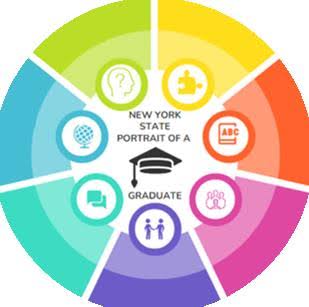
As school districts throughout New York State assess their programs and curricula, a significant transformation is taking shape at the state level. Approved by the New York State Board of Regents, the New York State Portrait of a Graduate (POG) serves as the foundation of the state's "NY Inspires" initiative — an ambitious effort aimed at overhauling public education, replacing conventional graduation requirements, and redefining what student achievement looks like.
For local taxpayers, parents, and school boards, grasping what the Portrait entails, how it will be phased in, and its relationship to state funding is essential for understanding the road ahead for public schools.
What the Portrait of a Graduate Covers
Rather than measuring students primarily through standardized tests and seat time, the Portrait of a Graduate defines a culturally responsive New York high school graduate through six essential qualities:
Academically Prepared: Demonstrating a solid command of state learning standards and readiness for college, careers, and participation in civic life.
A Creative Innovator: Applying imagination, curiosity, and adaptable thinking to tackle complex challenges and navigate change.
A Critical Thinker: Evaluating information, weighing evidence, and drawing connections across different disciplines.
An Effective Communicator: Conveying ideas clearly through writing, speaking, and digital platforms while remaining open to a range of viewpoints.
A Global Citizen: Engaging ethically across local, global, and digital environments, drawing on civic awareness to contribute meaningfully to a diverse democratic society.
Reflective and Future-Focused: Establishing purposeful goals, practicing self-examination, and making decisions that support personal growth and emotional health.
As these competencies take hold, diploma requirements are evolving alongside them. Under the broader initiative, the state will require instruction in financial literacy and climate education, mandate at least one Career and Technical Education (CTE) credit, and shift to a unified diploma model in which higher-level accomplishments are acknowledged through specialized seals and endorsements.
How the Rollout Is Structured
The state is implementing the initiative in stages, giving districts time to adjust their professional development:
Phase 1 — Installation (Fall 2025–Summer 2027): The current phase focuses on educating school boards, training administrators, and aligning Portrait attributes with existing academic standards. Graduation requirements are not yet affected.
Phase 2 — Initial Implementation (Fall 2027–Summer 2029): State-developed rubrics will be introduced, and the gradual retirement of traditional Regents Exam graduation requirements will begin. While exams tied to federal mandates will continue, students will have access to alternative options such as capstone projects and performance-based portfolios.
Phase 3 — Full Statewide Adoption (Fall 2029 and Beyond): The updated framework takes effect for Cohort 2029 — students entering ninth grade in the 2029–2030 school year. These students will graduate under a redesigned system featuring transcripts that reflect Portrait-based competencies.
The Link to State Funding
District financing is connected to these changes indirectly, through compliance obligations and regional support structures:
Foundation Aid: This funding stream is tied to a district maintaining registered status by adhering to NYSED regulations. Once the new requirements are formally codified, compliance will be a prerequisite for receiving standard state allocations.
BOCES Aid: Regional BOCES networks are central to delivering the staff training required during the Installation phase. Districts can recoup a portion of those costs through BOCES state aid in the subsequent fiscal year.
CTE Incentives: Because the Portrait places a premium on real-world skill development, it encourages greater investment in Career and Technical Education. State aid formulas frequently favor approved vocational programs, allowing forward-thinking districts to maximize their aid returns.
Source: https://www.nysed.gov/grad-measures/new-york-state-portrait-graduate